




Event Promotion Strategy: How to Drive B2B Summit Ticket Sales Organically
Running a B2B summit is expensive. You pay for venue rentals, premium catering, AV production, and speaker travel. By the time you sit down to plan your event promotion strategy, your budget is already stretched thin. The default reaction for many event planners is to turn straight to paid social ads. You set up campaigns on LinkedIn or Meta, burn through thousands of dollars, and pray that strangers click through to buy a twelve-hundred-dollar conference pass.
Most of those paid ad clicks convert poorly. B2B decision-makers rarely buy high-ticket event passes because a sponsored post popped up in their feed. They register for summits when trusted peers, colleagues, or industry experts recommend the experience. If you want to sell out your summit while keeping acquisition costs under control, you need a different playbook. You need an event promotion strategy built on organic reach, social advocacy, and peer-to-peer amplification.
At Go Spread, we help organizers transform speakers, sponsors, attendees, and internal teams into active brand advocates. Instead of renting attention through ad platforms, you activate the networks of people who are already invested in your summit. Here is how you can drive ticket sales for your next B2B summit without relying heavily on paid social ads.
Why Paid Social Ads Fail High-Ticket B2B Summits
Paid social advertising works well for low-friction conversions. If you sell a twenty-dollar ebook or a free webinar, paid ads generate quick volume. A premium B2B summit is a completely different product. Attending a conference requires time out of the office, travel arrangements, manager approval, and a significant financial commitment. Cold audiences on LinkedIn do not know your brand well enough to make that leap based on a banner ad.
When you rely on paid ads as your primary event promotion strategy, your customer acquisition cost escalates rapidly. As ad inventory becomes competitive, click-through rates drop while cost-per-click numbers rise. You end up spending hundreds of dollars per registration just to reach people who are skeptical of cold marketing pitches.
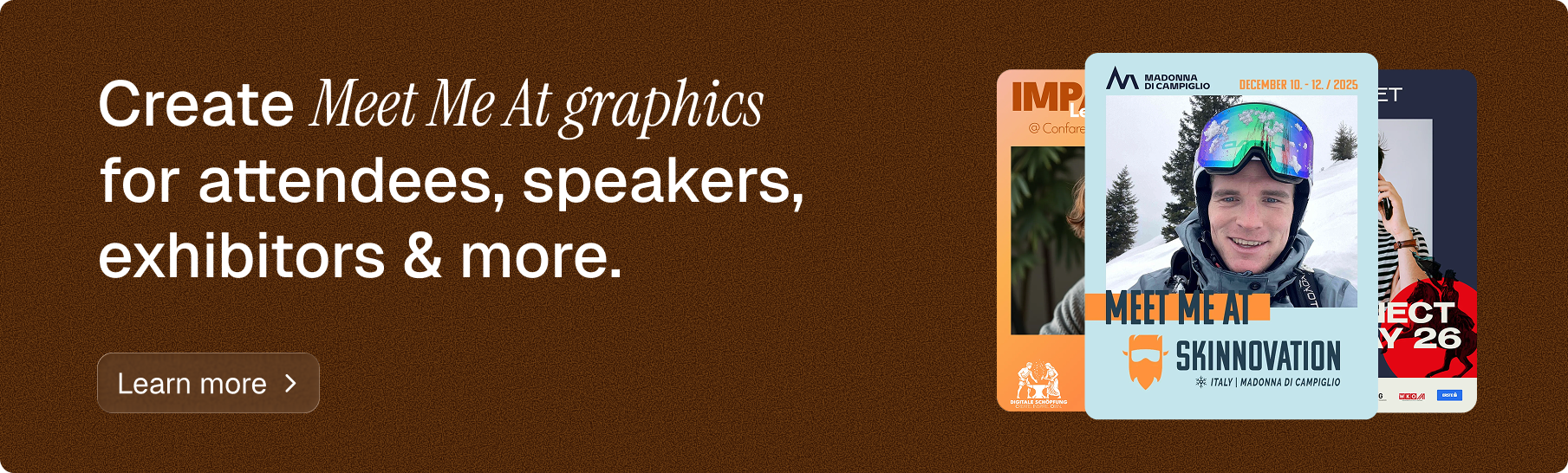
Social proof drives high-stakes business decisions. When an executive sees a respected peer post a personalized "I am speaking at" or "I am attending" graphic on LinkedIn, credibility is instantly established. Peer recommendations bypass the skepticism associated with corporate ads. By reallocating your energy toward turning event participants into promoters, you build a self-sustaining marketing engine that scales organically.
Activating Your Speakers as Event Promotion Strategy
Your summit speakers are your strongest promotional asset. They possess established authority, active professional networks, and direct access to your target audience. Yet, standard organizer requests fall flat. Sending a generic email that says "Please share our event on your social channels" rarely produces results. Busy keynote speakers forget or ignore vague prompts.
To make speaker advocacy work within your event promotion strategy, you must remove all friction. Speakers want to look professional and showcase their industry leadership, but they do not have time to design graphics or draft complex posts. Give them turnkey assets the moment their session is confirmed.
Personalized Visual Assets: Provide custom headshot graphics displaying their session title, date, and brand colors.
Pre-Formatted Copy Options: Write short, high-impact post templates tailored for LinkedIn that focus on the value their session delivers.
Unique Referral Links or Discount Codes: Give speakers custom tracking links or guest passes they can share with their immediate network.
When you make sharing effortless through dedicated advocacy tools like Go Spread, speakers post earlier and more frequently. Every post introduces your summit to thousands of relevant professionals through a trusted voice, generating high-intent traffic without ad spend.
If you want to refine the visual presentation of your speaker graphics, check out our guide on speaker announcement template design guide for event marketers.
Turning Registered Attendees into Brand Ambassadors
The moment someone purchases a ticket to your B2B summit represents peak engagement. They are excited about the content, eager to network, and proud to invest in their career. Most event organizers waste this moment by sending a flat receipt email with a PDF ticket attachment. That is a major missed opportunity in your event promotion strategy.
You can turn that initial confirmation page into a powerful viral loop. Immediately after registration, invite attendees to share their attendance on LinkedIn. When an attendee announces they are going to your summit, their immediate network takes notice. Colleagues and peers in similar roles naturally ask themselves if they should be attending too.
Peer confirmation is the strongest driver of organic ticket sales. When professionals see their colleagues joining an event, FOMO replaces skepticism.
To maximize post-registration sharing, make the process instant. Present a personalized "I'm Attending" graphic directly on the confirmation screen, accompanied by a single button that pushes the image and text straight to LinkedIn. You can read more about setting up these post-purchase workflows in our article on how to incentivize early registrants to share attendance.
Mobilizing Sponsors, Exhibitors, and Partners
Sponsors and exhibitors invest heavily in B2B summits to generate leads and build relationships. However, many wait until the expo hall opens before engaging with attendees. You should encourage your partners to drive ticket sales weeks before the event kicks off.
In corporate partnerships, co-marketing creates mutual value. When sponsors promote your summit, they attract their target accounts to the venue, directly increasing their own return on investment. Integrate partner advocacy into your sponsorship packages right from the start.
Stakeholder Group | Primary Motivation to Share | Recommended Advocacy Asset |
|---|---|---|
Keynote Speakers | Thought leadership & audience reach | Session-branded headshot graphic + single-click post link |
Summit Attendees | Professional networking & peer status | Personalized "I'm Attending" social card + invite code |
Corporate Sponsors | Lead generation & booth foot traffic | Custom "Meet Us At" partner banner + VIP discount pass |
Event Volunteers | Community involvement & career entry | Team badge graphic + personal referral tracking link |
Equip sponsors with custom "Meet Us At Booth #108" banners and branded VIP passes for their top clients. When sponsors distribute complimentary or discounted passes across their customer bases, your ticket count rises without added advertising overhead.
Rallying Your Internal Team and Event Volunteers
Your internal staff, program committees, and volunteers are deeply committed to the summit's success. Yet, internal team members are frequently left out of the core marketing plan. A comprehensive event promotion strategy activates every employee as an ambassador.
Encourage your sales, customer success, and product teams to share summit updates on their social profiles. Sales representatives can use event passes as touchpoints to re-engage cold prospects or close open deals. Customer success managers can invite current clients to join hosted roundtables at the summit.
Host an Internal Launch Meeting: Walk your staff through the event vision, target buyer personas, and key selling points.
Distribute Personal Share Links: Give each employee a unique link so they can track how many registrations originate from their network outreach.
Gamify Team Advocacy: Set up internal leaderboards with small rewards or recognition for employees who bring in the most verified registrants.
Volunteers and session moderators are equally eager to share their involvement. Providing them with branded "Volunteer Team" assets allows them to celebrate their industry participation while expanding your event's reach into new professional circles.
Executing a Coordinated Organic Promotion Campaign
Organic advocacy works best when you orchestrate content in strategic waves. Scattershot posts sent weeks apart produce minimal momentum. To build compounding interest, structure your campaign around clear promotional milestones leading up to day one.
Start your push with an early-bird announcement wave centered on keynote speaker reveals. Prompt your first batch of confirmed speakers to post simultaneously. This creates a surge of visibility across LinkedIn feeds within a 48-hour window, establishing immediate market presence.
Follow up with an attendee-driven push mid-campaign. As ticket registrations roll in, highlight key sessions and feature user-generated posts from participants who shared their "I'm Attending" graphics. For detailed tactics on keeping momentum strong right up to the event date, explore our resource on getting conference participants posting on LinkedIn before day one.
In the final weeks before the summit, focus on agenda deep-dives and VIP partner invitations. According to research on event marketing trends published by Event Organizer Network, word-of-mouth referrals and peer sharing account for over 40% of late-stage ticket sales for regional B2B conferences. Capitalize on that urgency by encouraging existing ticket holders to tag colleagues who should join them.
Measuring advocacy Impact and Refining Your Approach
To prove that organic advocacy outperforms paid social ads, you must track participation metrics accurately. Avoid focusing solely on vanity metrics like raw impressions. You need clear visibility into how social shares translate directly into registration revenue.
Monitor your advocacy performance across three core areas:
Advocate Activation Rate: The percentage of confirmed speakers, sponsors, and attendees who actively share their customized event graphics.
Referral Traffic Volume: The total number of unique website visitors landing on your sales page via personalized referral links.
Direct Ticket Conversions: Verified ticket sales tied back to specific speaker, attendee, or sponsor tracking parameters.
By monitoring these data points throughout your campaign, you can identify your most active promoters. Reach out directly to thank top-performing speakers and partners, or grant them extra perks like upgraded booth space or exclusive VIP dinner invites. Recognizing advocate contributions strengthens long-term relationships and ensures enthusiastic support for future summits.
Building a Sustainable Event Promotion Engine
Relying on paid social ads creates a treadmill where every registration costs more than the last. Shifting your focus toward social advocacy turns your summit participants into an engine for continuous growth. When speakers, attendees, sponsors, and team members actively broadcast their participation, your event gains organic reach that money cannot buy.
Integrating simple advocacy workflows through Go Spread allows you to scale organic promotional efforts without adding stress to your team. By making visual content generation effortless for your participants, you establish real credibility, lower customer acquisition costs, and fill seats at your B2B summit. Build your next event promotion strategy around the power of human connection, and watch your organic ticket sales climb.


